Leica's Two Arguments for a Fixed-Lens Camera
One company, two philosophies: the Q3 bets on decisive automation, the M11 on deliberate mechanics.
The Autofocus Case and the Rangefinder Case
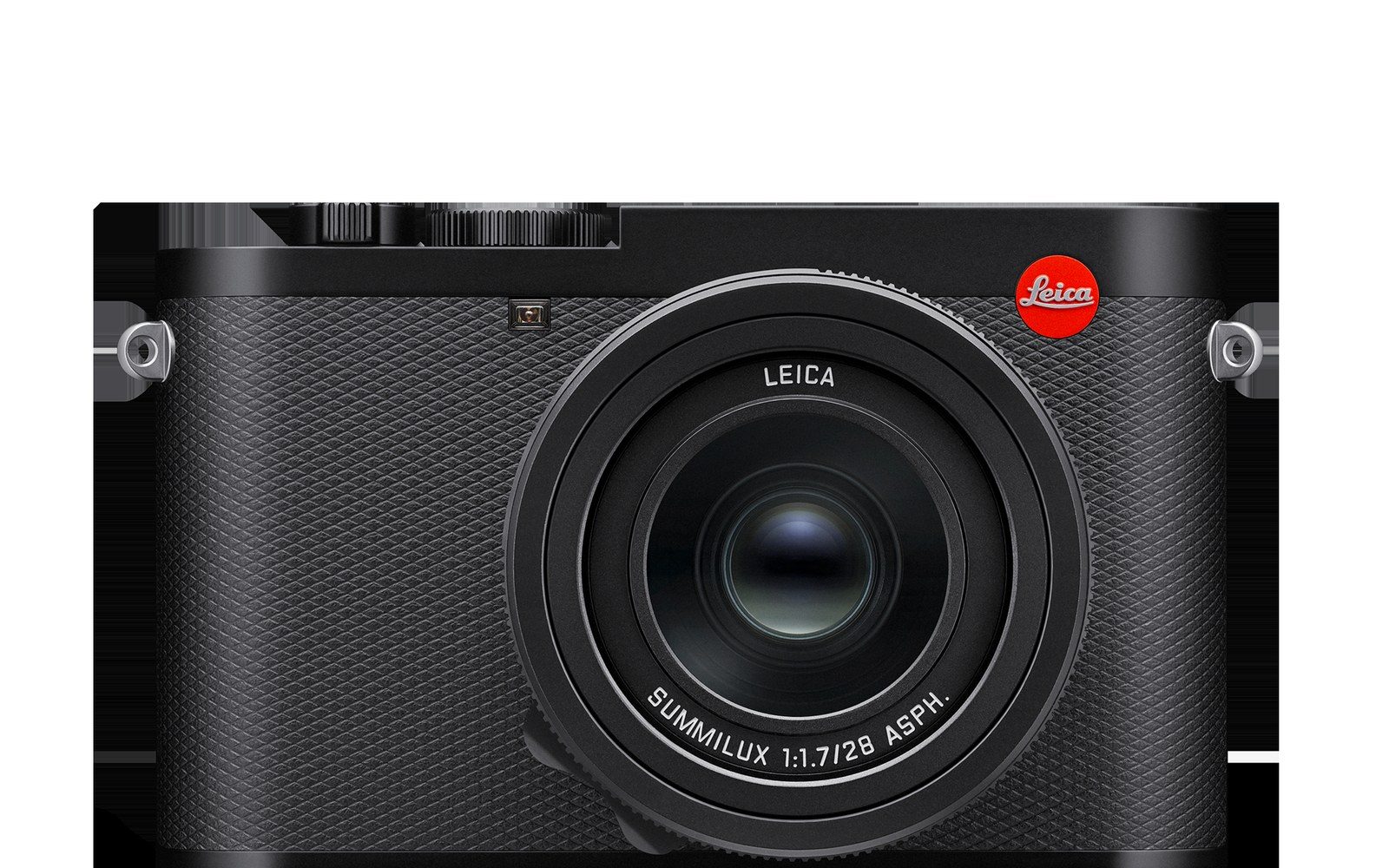
Leica Camera, headquartered in Wetzlar, makes its fixed-lens argument in two distinct registers. The Q3, announced in 2023, pairs a 60 MP BSI CMOS full-frame sensor with a Summilux 28mm f/1.7 ASPH lens sealed permanently to the body. The M11, released in 2022, carries a 60 MP sensor of its own — a triple-resolution BSI design switchable between 60, 36, and 18 MP — behind a rangefinder patch that has defined Leica's identity since Oskar Barnack's original compact 35mm design a century ago. Both cameras cost considerably more than most of the industry's flagship mirrorless bodies. The Q3 rejects interchangeable lenses outright; the M11 keeps the M mount but fixes the photographer to a single way of working.
The Q3's case rests on integration. Leica tuned the Summilux 28mm specifically for this sensor; there is no optical compromise built around future-proofing a mount throat or accommodating a range of rear elements. Phase-detect autofocus covers the full frame, and subject recognition — faces, eyes, bodies — runs continuously. The 28mm field of view is wide enough for environmental portraiture and reportage but not so wide that it distorts at normal working distances, a calculation Leica published as a deliberate editorial choice when the Q line launched with the original Q in 2015. Weather sealing, a 5.76-million-dot electronic viewfinder, and the same thumb-dial ergonomics carried across recent Q generations make the Q3 a camera a working photographer can pick up with almost no adjustment period.
The M11 does not offer autofocus at all. Its rangefinder mechanism couples mechanically to any M-mount lens — the flange distance of the M system, standardised across decades, means a lens made in the 1960s focuses accurately on the 2022 sensor — but the camera ships as a fixed body in a different sense: fixed to a way of working. The photographer sets focus by aligning a split or superimposed image in the rangefinder patch, a tactile and visual process that slows the act of framing and, Leica's argument goes, makes it more considered. Henri Cartier-Bresson worked with M-series bodies; the M11 is not trading on nostalgia alone but on a documented photographic tradition that favoured the quietness and compactness of the rangefinder layout for street and documentary work.
What the M11-P Adds
The M11-P, a variant released in late 2023, introduced Content Credentials to Leica's lineup: the camera implements the C2PA standard, embedding a cryptographically signed provenance record in every image file at the moment of capture. The M-mount body is aimed squarely at editorial and documentary photographers — precisely the audience for whom image authenticity is a current professional concern — and the C2PA specification gives buyers and editors a verifiable chain of custody from sensor to screen. No other element of the M11-P's specification departs from the standard M11; the provenance implementation is the entire editorial distinction of the variant.
Sony, Canon, and Nikon have all committed to C2PA implementation across parts of their lineups, but the M11-P was among the earliest shipping bodies to carry it. That Leica chose its rangefinder — rather than the more commercially accessible Q3 — as the first implementation reflects where the company believes authenticated documentary capture matters most.
The two cameras share a sensor resolution figure and very little else. The Q3 argues that a fixed lens, when it is the right lens, removes a decision that would otherwise slow a photographer down. The M11 argues that slowing down is the point, and that the rangefinder's particular friction produces photographs that faster systems would not. Both arguments are serious. Neither is wrong.