The Sony a7R V and the Resolution Ceiling Argument
The 61 MP sensor is the headline; the AI autofocus system underneath it is the harder argument to dismiss.
What Sony Published, and What It Means
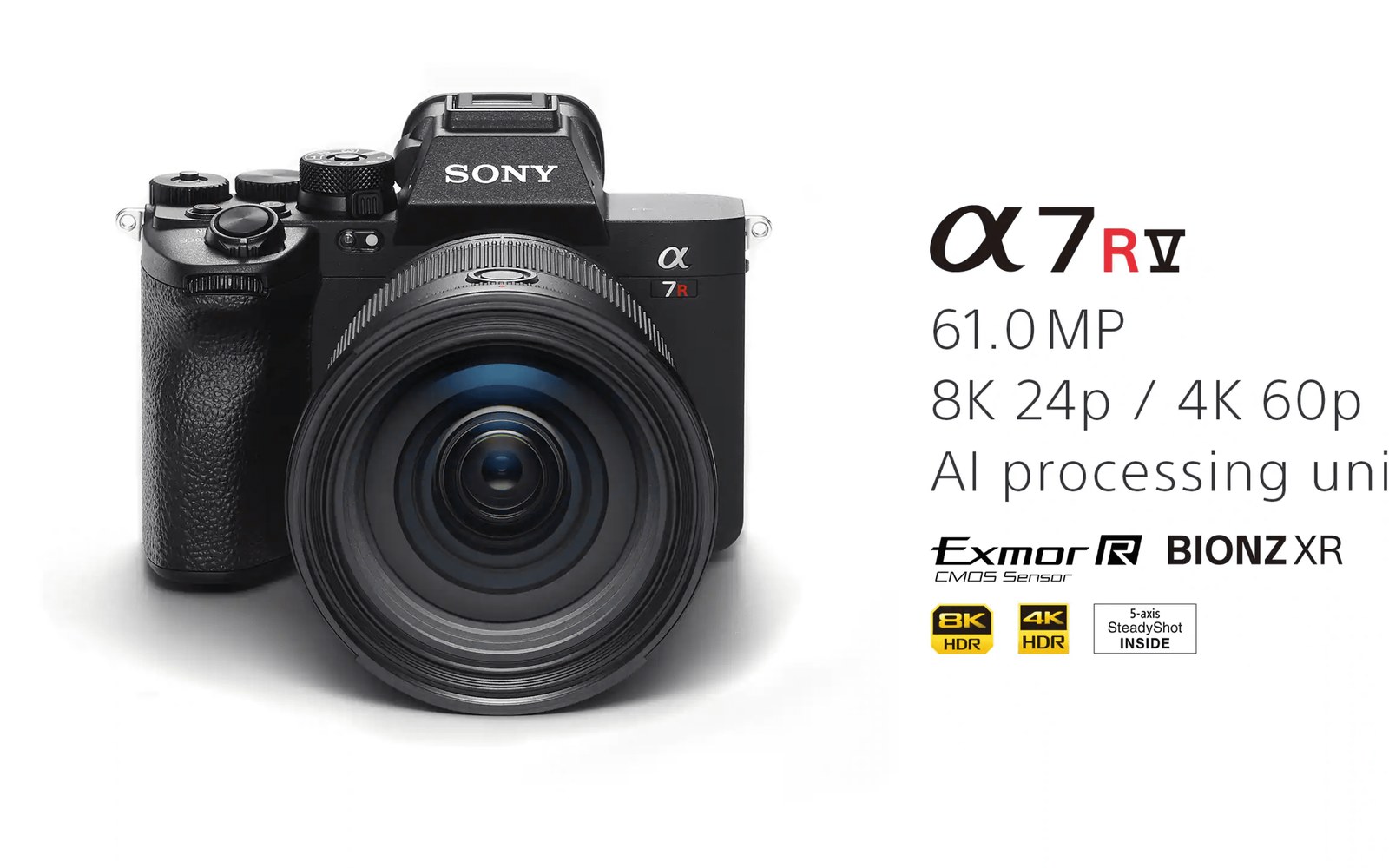
Sony announced the a7R V in October 2022, pairing the same 61 MP back-side illuminated Exmor R full-frame sensor carried by the a7R IV with a substantially rebuilt processing and autofocus architecture. The sensor itself was not new — Sony held the resolution steady rather than racing upward — but the AI-based subject recognition that runs on the new BIONZ XR engine was a genuine step. The system recognizes human figures, animals, birds, insects, cars, trains, and aircraft, and it operates in real time across the full 61 MP readout rather than a cropped region.
The pairing matters because 61 MP demands fast, decisive autofocus to be useful. A misfocused frame at that resolution is not salvageable by sharpening software; the miss is simply more legible than it would be at 24 MP. Sony's implicit argument is that putting serious subject-recognition capability on the R body addresses the objection that high-resolution sensors are slow, deliberate tools poorly suited to anything that moves. Whether working photographers accept that argument depends largely on what they shoot: a portrait or architectural photographer will likely never test it; a wildlife photographer with an a7R V and a long prime will.
The a7 IV, announced in late 2021 with a 33 MP sensor and the same BIONZ XR processor, occupies the adjacent position in Sony's lineup. Sony's own published specifications position the a7 IV as the generalist full-frame body — the 33 MP count sits at the point where a single file is large enough for most commercial print uses and small enough to not burden continuous-shooting workflows. The a7R V's files, at roughly twice the pixel count, run larger than some compressed raw formats from competing systems at their maximums, and that has storage and throughput consequences that are real regardless of what any given photographer thinks of resolution ceilings.
Sony has not disclosed what share of a7R sales go to photographers who consistently shoot at the sensor's full output versus those who pixel-bin or crop heavily in post. What the a7R V's published specification sheet does confirm is an ISO range of 100–32000 (expandable to 50–102400), a five-axis IBIS rated at 8 stops of compensation, and a body that accepts CFexpress Type A and SD cards simultaneously — practical acknowledgements that a 61 MP working tool needs infrastructure to match its ambitions.
The resolution ceiling argument, in the end, is not about whether 61 MP is too many pixels. It is about whether the rest of the system around those pixels has caught up. With the a7R V, Sony's answer is that it has.