The Nikon Zf Knows Exactly What It Looks Like
A full-frame mirrorless camera designed to telegraph its own heritage — and succeeding at it.
The FM2 in Mirrorless Clothing
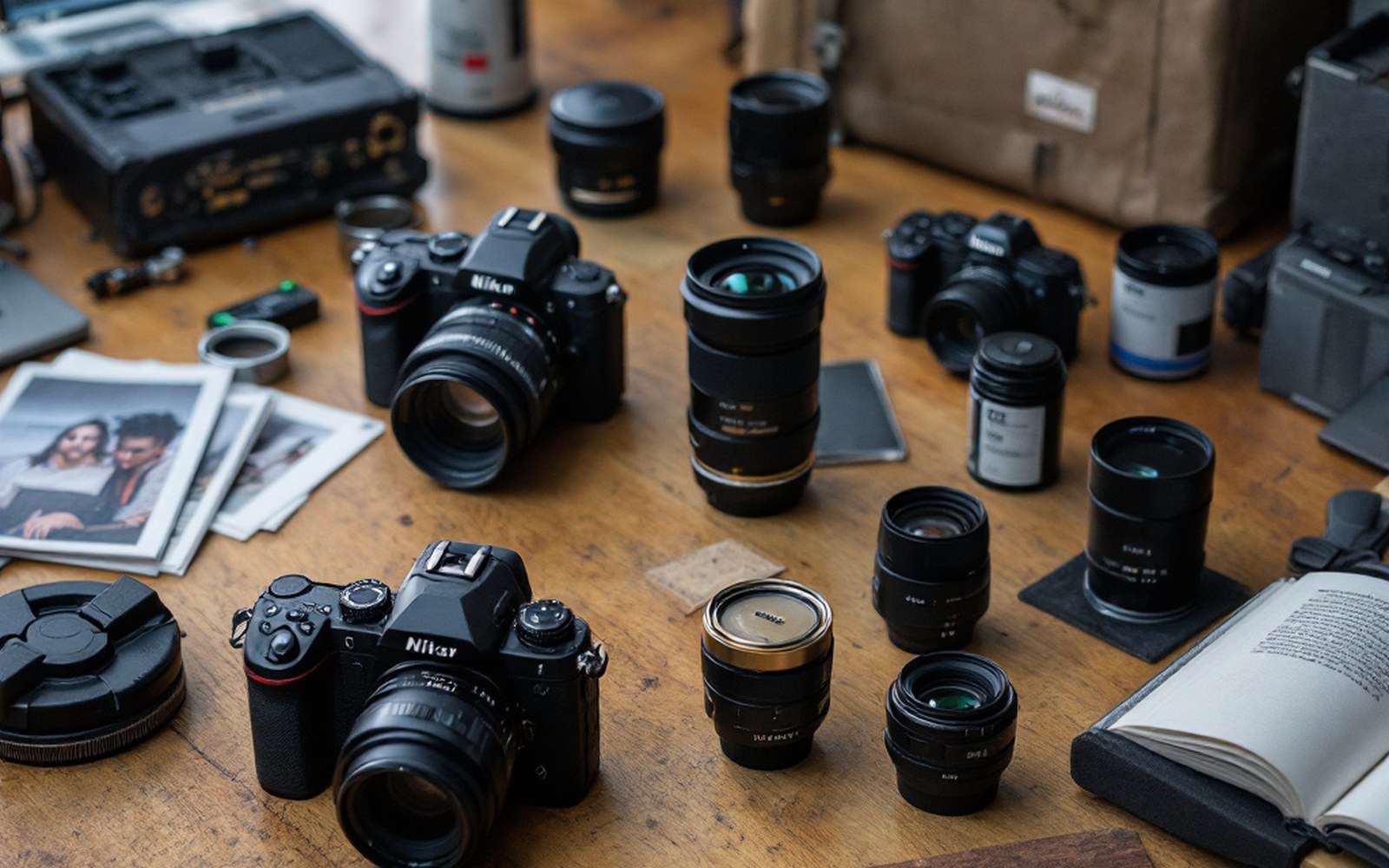
Nikon announced the Zf in September 2023, pitching it explicitly as a design homage to the FM2, the manual-focus film body the company sold from 1982 through 2001. The silhouette is not a coincidence: the top-deck layout, the dial-per-function control scheme, and the brass-and-leatherette finish panels all quote the FM2 directly. Nikon's own product documentation describes the camera as a "fusion of cutting-edge technology and Nikon's historical design heritage" — language the company deployed deliberately, knowing exactly which corner of the market it was targeting.
Underneath the vintage dressing sits the same 24.5 MP back-side illuminated full-frame sensor used in the Z6 II — a capable, low-light-oriented chip that prioritises usable ISO range over maximum pixel count. The body carries IBIS rated to eight stops of compensation, phase-detect autofocus with subject-recognition, and full compatibility with the Z-mount lens system. The heritage is surface-deep in the best possible sense: the camera underneath is current.

The Zf's release coincided with a broader market moment. Used-market prices for CCD-era compacts — Sony Cybershots, early Canon Ixus bodies, Casio Exilim models — had climbed sharply through 2023, driven by younger buyers attracted to what those cameras looked like and what they produced. Nikon's timing was not an accident. By building a new camera that reads as vintage, it addressed demand the used market was absorbing instead. The Zf starts at a price well above any CCD compact, but it delivers a contemporary imaging platform, and that is a different proposition: nostalgia sold at new-camera reliability.
The Zf's design brief also signals something about where manufacturers believe desire originates right now. When Sony released the ZV-1 II and Fujifilm deepened the X100 line, the argument was ergonomic and functional. When Nikon styled the Zf after a film body from the early 1980s, the argument was emotional — and the market answered.