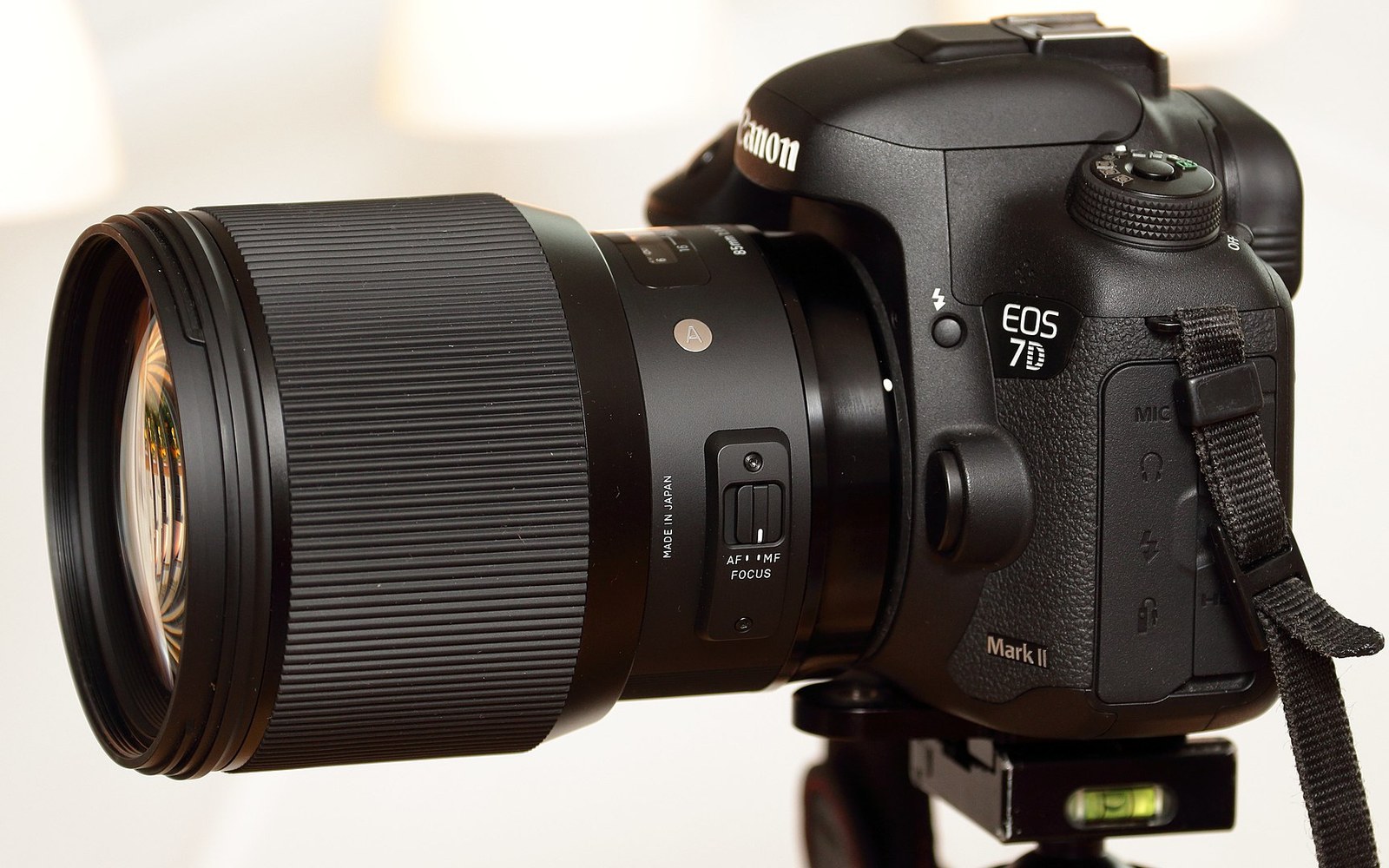
Canon Kept RF Shut, Then Didn't
The RF mount launched in 2018 as Canon's private property. Six years later, that position had softened — but only so far.

The Closed Door
When Canon introduced the EOS R system and its RF mount in September 2018, the company made no licensing announcements. The mount's 54 mm internal diameter and 20 mm flange distance were published as engineering fact, but the protocol governing electronic communication between body and lens stayed proprietary. Third-party manufacturers could measure the physical dimensions; they could not legally implement the electrical handshake. Sigma, Tamron, and Tokina — all of whom had spent years building EF-mount businesses — were effectively locked out from day one.
Canon's stated rationale was consistent: a closed ecosystem protects image quality and autofocus reliability because Canon controls the full communication stack. Whether that argument is engineering or commerce depends on who is making the case, but the effect was unambiguous. Photographers who moved to EOS R bodies found a first-party lens catalog that grew quickly and impressively — the RF 85mm f/1.2L, the RF 28-70mm f/2L, the RF 100-500mm — but at first-party prices, with no competitive pressure from below.
Contrast that with what Nikon did at almost exactly the same moment. The Z mount launched in August 2018, one month before RF, and Nikon opened it almost immediately to third parties through a formal licensing programme. In the years that followed, Tamron announced Z-mount development; Sigma followed. The Z-mount's specification was shared under a licensing framework that let independent manufacturers build fully communicating lenses — not adapters, but native mount optics. The practical result: Z-mount photographers could buy a Sigma 18-50mm f/2.8 at a price Canon RF shooters had no equivalent access to.
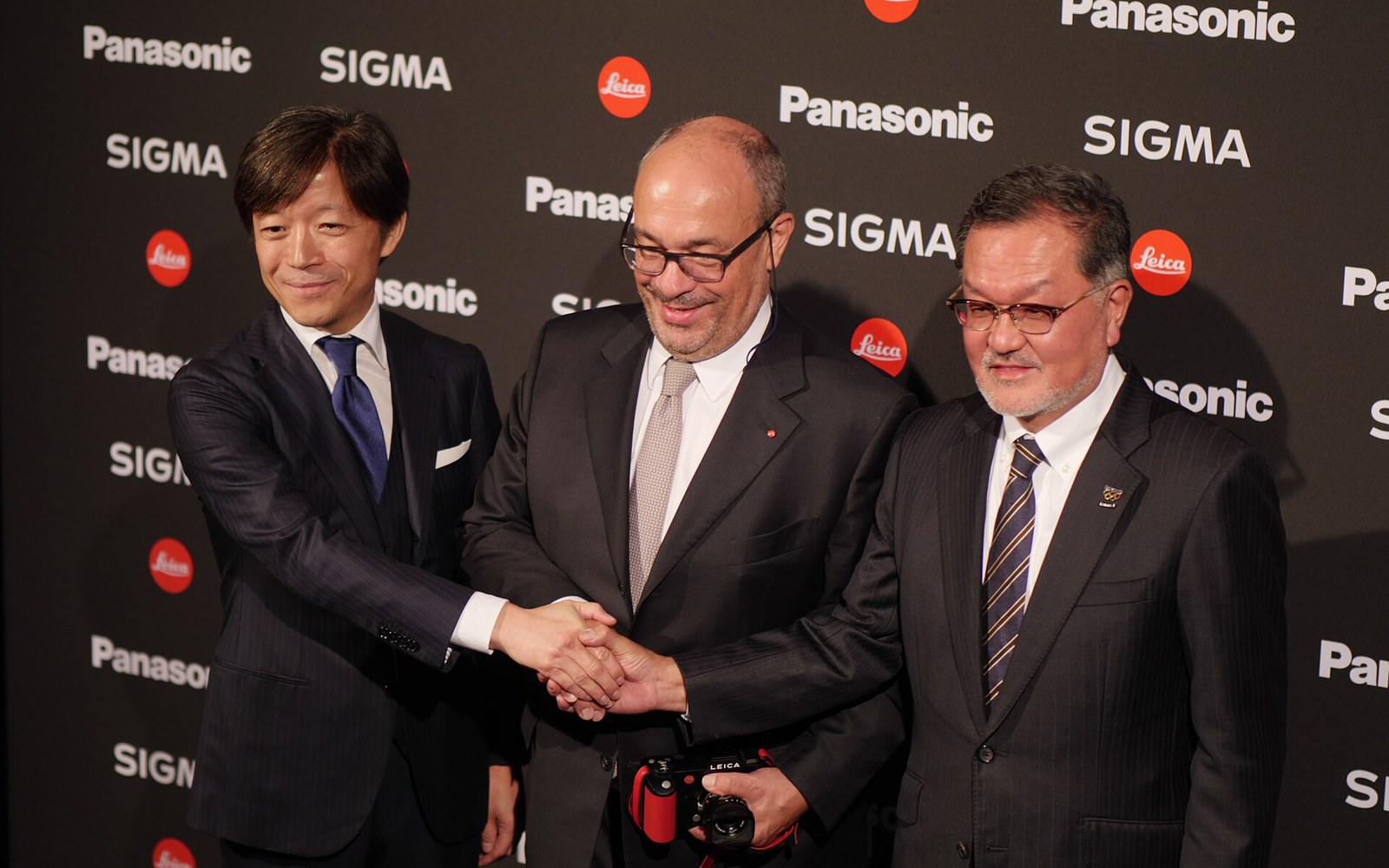
The L-mount alliance, formalised in September 2018 by Leica, Panasonic, and Sigma, took the opposite philosophy entirely — a shared standard with no single gatekeeper, open by design to any manufacturer willing to license the spec. It was a structural answer to the question Canon's closed approach raised.
The Crack in the Wall
Canon's position began to move in 2023 and into 2024. The company announced licensing agreements with Cosina and a small number of other manufacturers, allowing native RF-mount lens production with full electronic communication. Cosina — the Nagano-based maker behind Voigtländer optics — was a notable name in that list, given its role in the adapted-glass market. Tamron also confirmed development of RF-mount lenses under a licensing arrangement.
The agreements came with conditions. Canon has not published a blanket open-licensing programme of the kind Nikon maintains. Each arrangement appears to be negotiated individually, and Canon has continued to distinguish between what it licenses and what it withholds — there is no indication that the full autofocus communication protocol, including subject-tracking and eye-detect integration, transfers to every licensee on the same terms Canon's own engineers enjoy. The result is a licensing posture that is open enough to blunt the criticism without being open in the way Nikon's programme is.
Chronology
- August 2018Nikon Z mount launches; a licensing programme follows
- September 2018Canon RF mount launches; no third-party licensing announced
- September 2018L-mount alliance formalised by Leica, Panasonic, Sigma
- 2023–2024Canon announces selective RF licensing agreements including Cosina and Tamron
Sigma's Kazuto Yamaki has spoken publicly on multiple occasions about the difficulty of accessing RF mount — Sigma, the company that joined the L-mount alliance as a founding member and produces native Z-mount glass, has not announced an RF lens as of mid-2025. That absence is as legible as any statement.
What the Gap Costs
The practical consequence falls on EOS R system buyers at the mid-range. Canon's own RF-S lenses address the APS-C tier, and the RF 50mm f/1.8 and RF 35mm f/1.8 Macro brought some price relief to the full-frame lineup, but the aggressive third-party competition that has kept Z-mount and L-mount pricing in check has had no equivalent in the RF ecosystem. A Z-mount or E-mount photographer choosing a fast 35mm prime has options across three or four manufacturers at meaningfully different price points. An RF shooter, as of mid-2025, still has fewer.
Canon's RF system is technically accomplished — the lenses are, by any optical measure, among the best the company has ever made. The question the licensing history raises is whether a closed ecosystem, even a good one, serves the full range of people who buy into it. The cracks that appeared in 2023 and 2024 suggest Canon reached its own answer to that question, even if the answer remains partial.