A Lens Outlives the Mount It Was Made For
Mirrorless flange distances opened the adapter market; what a lens keeps and what it gives up when it crosses mounts.
The Physics That Made It Possible
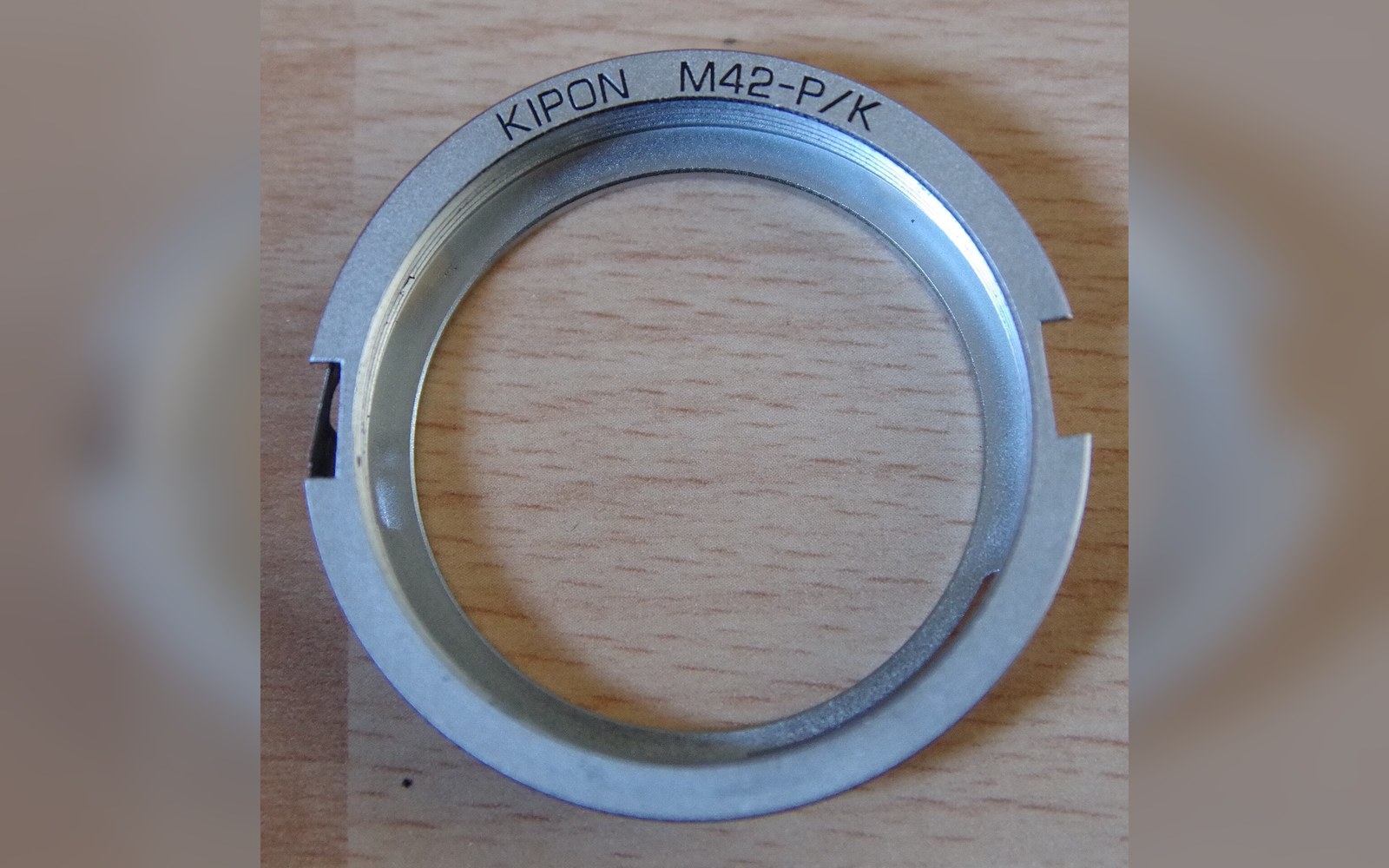
When Canon, Nikon, Sony, and Fujifilm each moved to mirrorless bodies, they shortened the distance between lens mount and sensor dramatically. The Leica M mount sits at 27.8 mm. The Sony E mount sits at 18 mm. That gap — nearly a centimeter of empty space — is precisely what an adapter fills, and it does so without optics, without compromise to the glass itself. A dumb adapter is a precisely machined tube. No firmware negotiates between the two systems. No electronic connection degrades the image. The lens simply sits where it was designed to sit, relative to the film or sensor plane, and the photons do what they always did.
This is why the L-mount alliance matters to legacy-glass users as well as to Sigma Art buyers: L-mount's 20 mm flange distance means almost every serious lens mount in photographic history has a positive adapter-thickness to work with. Nikon F, Canon EF, Contax/Yashica, Olympus OM, Minolta SR — all of them can be adapted cleanly because all of them were designed around longer register distances than any current mirrorless standard.
What Crosses the Mount and What Doesn't
Optical performance crosses almost entirely intact. A Voigtländer Nokton 50mm f/1.5 Aspherical — designed in the Cosina factory in Nagano and sold under the Voigtländer name since the late 1990s — renders on a Sony a7R V or an L-mount Leica SL2-S with the same field curvature, the same swirling out-of-focus quality, the same micro-contrast signature it would show on a rangefinder film body. The photons do not know they have changed mounts.
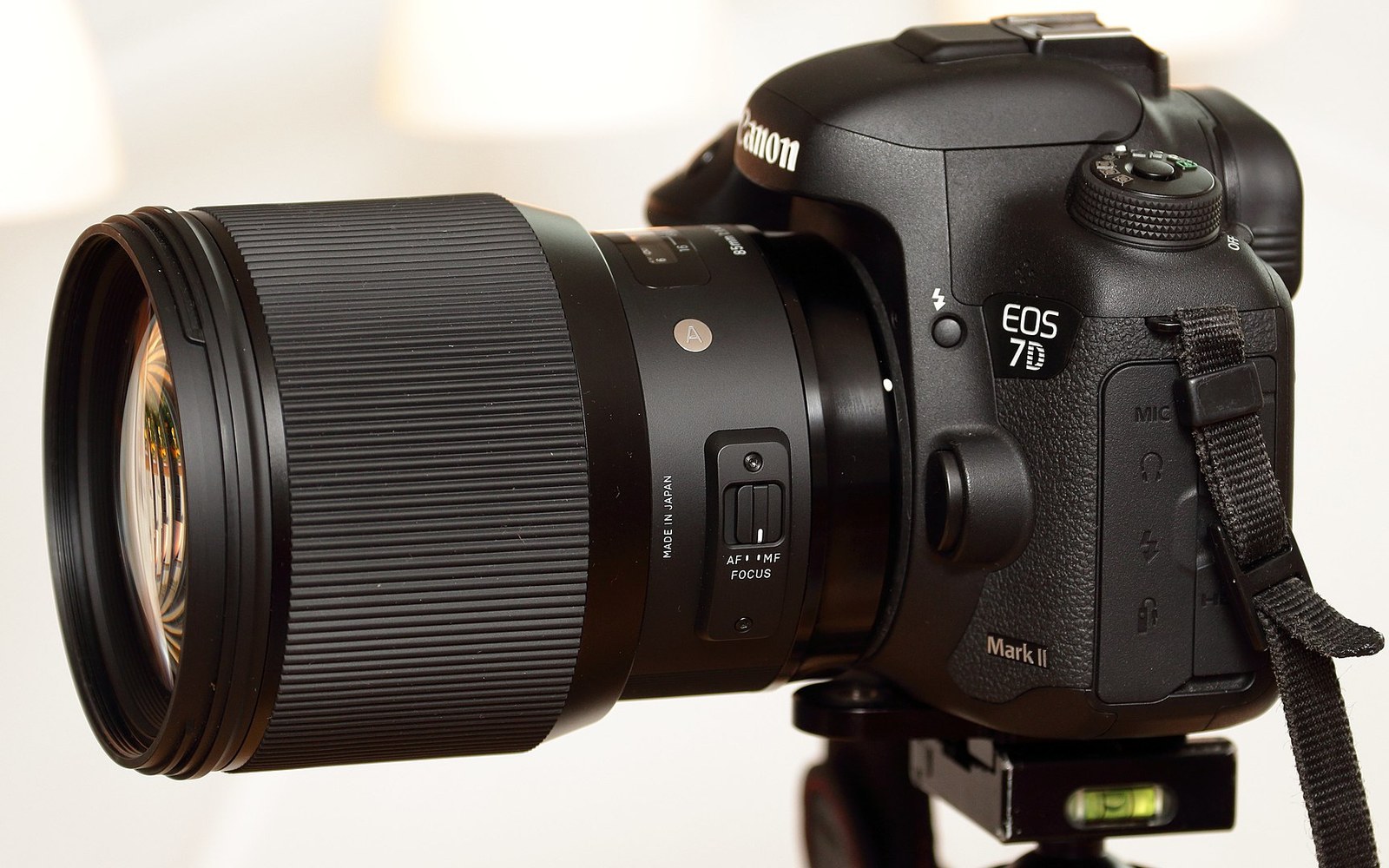
What does not cross: autofocus, in most cases. Electronic aperture control, where the original mount relied on it. Exif lens data, without a programmable adapter that accepts manual input. On cameras with in-body phase-detect AF arrays, the camera may still attempt contrast-detect focus hunting — functional but slow. The working method simply shifts. A photographer using Leica M glass on a Sony body learns to use focus peaking or the body's magnified manual-focus assist, tools that did not exist when the glass was made.
There is also a vignetting question on full-frame bodies with certain wide-angle M lenses. Short-flange rangefinder glass often projects light at an oblique angle toward the sensor corners — an angle that was manageable on film, where the emulsion is not angle-sensitive, and more problematic on back-side illuminated CMOS sensors, where the microlenses expect light arriving closer to perpendicular. Center crops and software correction handle most cases; the true outliers are extreme wide-angle lenses below 21mm.
Named Adapters, Named Lenses
The adapter market has a short tier list. Novoflex, the German manufacturer based in Memmingen, makes adapters machined to tolerances tight enough that infinity focus holds reliably — relevant when a photographer is using a legacy 85mm on a body where any play in the adapter shifts the focal plane. Techart produces the Pro Leica M-to-Sony E adapter, which incorporates a motorized helix that enables rudimentary autofocus with M-mount glass by physically moving the adapter body; it is slow by modern standards and works best with lenses faster than f/2, but it exists and it functions.
Olympus OM lenses — particularly the 24mm f/2, the 50mm f/1.4, and the 135mm f/2.8 — have developed a following on mirrorless bodies disproportionate to their original user base. The OM mount had a 46 mm flange distance, leaving room to adapt to anything. A clean copy of the 50mm f/1.4 Zuiko, a lens manufactured through the 1970s and 1980s, is routinely found for under a hundred dollars. The optical formula predates multi-layer coatings in its earliest versions, which is not always a weakness — a certain softness and flare wide open is exactly the aesthetic some photographers are after.
The case for adapted glass is not nostalgia dressed up as pragmatism. It is pragmatism wearing its own clothes: a proven optical formula, a price point that no modern equivalent matches, and a mirrorless body whose shorter flange distance turns a mechanical incompatibility into a solved problem.